

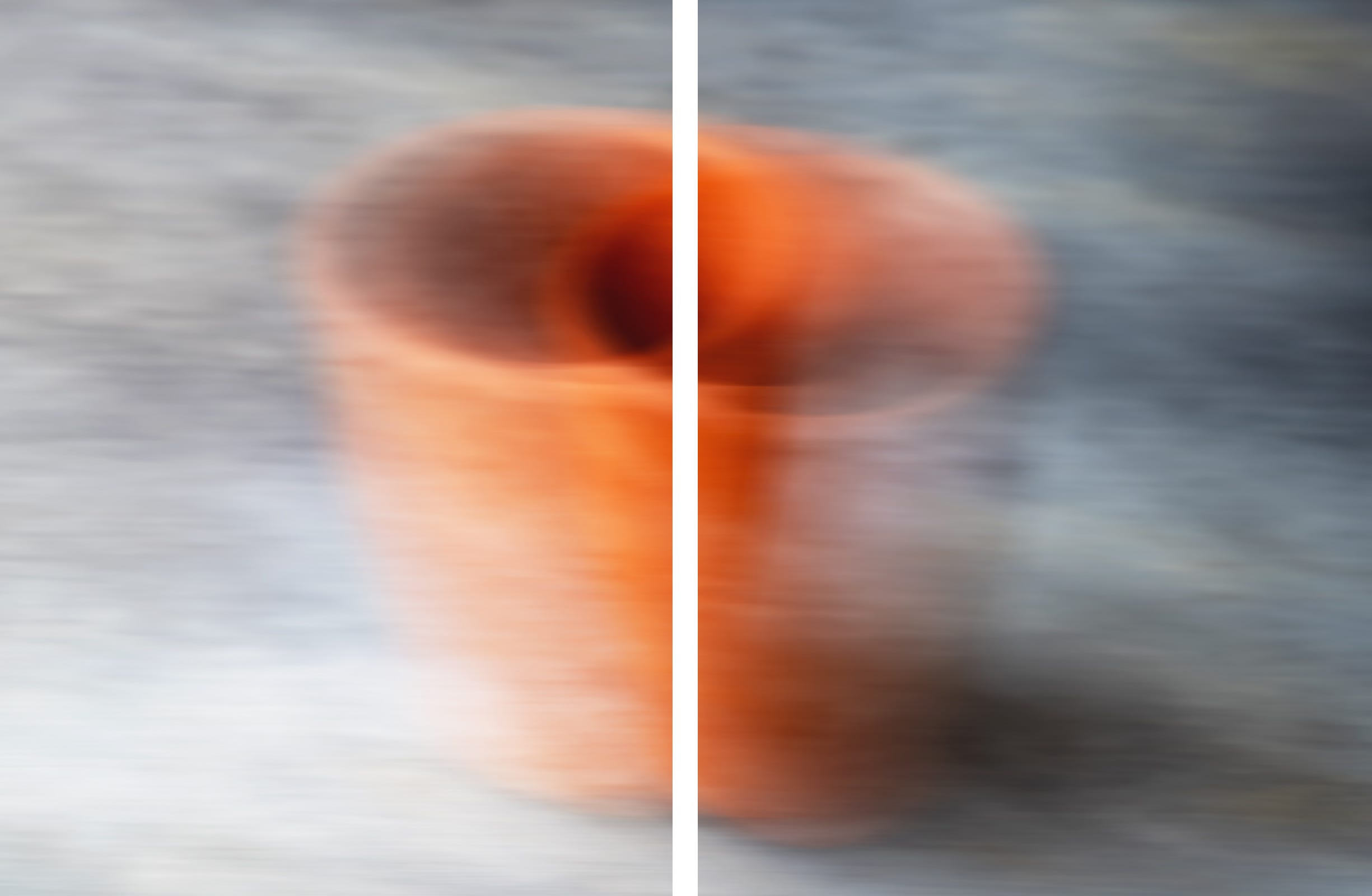
The orange plastic cup into which my father used to piss sat in the windowed recess in the kitchen of the house that was the first place I ever called home. In that same kitchen: a second orange plastic cup, one used for drinking. The drinking cup hung from the limb of a pine mug tree. The piss cup sat in its alcove. Each was defined for use by its station. Twin vessels: one to expel into and be filled, one to drink from and be emptied. Function and malfunction in a kitchen that was but one broken room connected to another broken room, the one in which my broken father laid.
That first orange cup, and that window recess, that alcove with its shattered plaster edges; wet, swollen and cracked. A shelf surface marked by the undersides of several thousand cups and bottles, ghosts of activity all confined to this one small area, yet at the same time confirming the cup’s travels to so many others. The cup, neighboured on one side by a block of Fairy household soap and its ooze of green ejaculate, and on the other by a bar of Imperial Leather soap, no dish or pedestal to elevate its pearl, alkaline carcass. The kitchen: half-finished plaster walls; white tiles claiming small holdings of the wall space, but those too wearing the neglect of care due their upkeep. Those grimy ceramic squares brought demarcation of a kind to the cooker and sink areas. Tiles, a cooker, a sink, a broken plaster alcove and shelf, a run-down room, bruised memory: my father’s orange cup.
Not always there, though, on that shelf, but sometimes beneath the withered organ that my father would evacuate his bladder with, and also beneath the smaller organs of the three boys who followed their father’s lead. What was used out of necessity by one was recorded and then seized upon by smaller hands – the facsimile that plays out between young and old, between father and child, between doer and copier across myriad routine patterns of a day, of a life. Young fingers copying the rooty configuration of older fingers.
Not always on that shelf, but also next to the settee, pushed into the corner where valance, hearth stone and wall created a nook of discreet clutter and shade. Not always to hold urine, but also a vessel for catching phlegm, more often than not its purpose when stationed next to the settee. I can see Dad’s cheeks puffed, balling pellets of mucus and firing them into the cup, tailed by beads of spit gripping to his bristled chin. When he was too ill to reach the cup, the cup would travel to my father. It would often then fall to one of us to empty its contents once full. We carried it carefully through to the kitchen, to be emptied at the sink: a journey both perilous and stomach-turning. At the sink the piss would find the plug hole with ease; the phlegm would require hosing underneath the tap. Once disposed of, we would sluice the walls of the sink clean. The sink as toilet; effluence and expectorant, leaving the house via sink hole and pipe, connecting to a next pipe and a drain – what did we care as to which pipe? That one pipe should carry this waste and not another? The cup would be swilled, rinsed, washed and swilled again. Then turned upside down onto the corner of the sink’s enamel ledge. There it would dry, and as it dried it would fade: from wet, glossy orange back to its desiccated, cracked and clouded hue. Later, empty and dry, it would be returned to its home once more, onto plaster shelf once more, into that recess once more; once more to the ghost circles of past mapped travels.
In reissuing scenes from the past, it’s easy to glorify an object or a moment of squalor or tragedy or beauty in order to metaphorise a memory into some larger truth, convenience or story. Interpretation, too readily declared, dims the light of things.1 Four decades and that orange cup is still one of the most vividly sharp fragments of my childhood. On that shelf, it’s form seems so very bright and perfect: tangible, perversely beautiful, Dad.
Lewis Hyde, A Primer for Forgetting, 2019
Your rich descriptive language brings inanimate objects to life, Matt. What a treat to read this piece. I remember copying my father when I was a young boy.
Writing like this is why I came to substack, thank you for sharing this beautifully faceted memory that is evoking so many unrelated ones of mine!